Knesset stalemate plunges Israel into political paralysis
Netanyahu loses his majority, Eisenkot cannot win one, and the wars go on
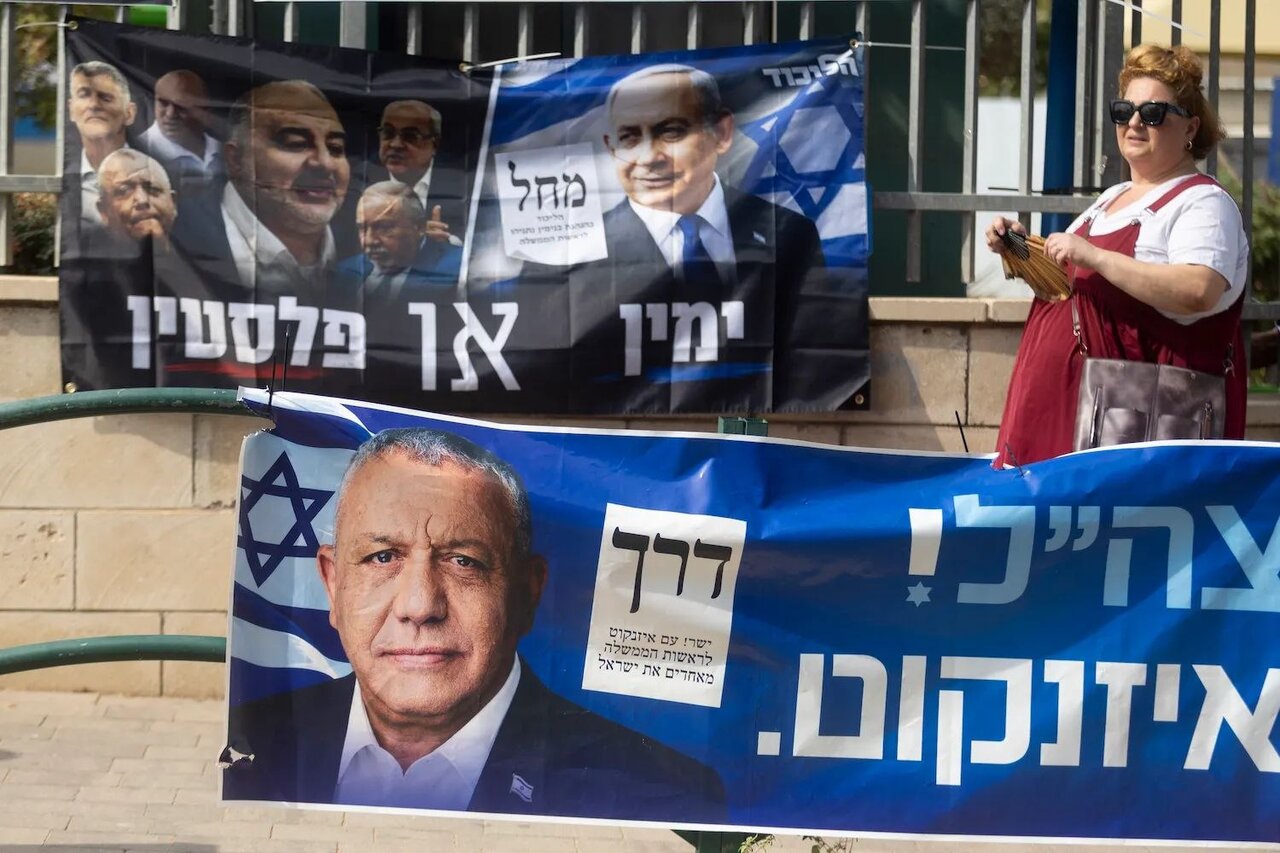
TEHRAN — Israel voted in record numbers on October 27 and produced a parliament nobody can run.
With more than 85 percent of ballots counted as of writing this, Benjamin Netanyahu's bloc held 53 seats, down from the 68 his coalition controlled. Former military chief Gadi Eisenkot's bloc had 48. Arab parties had 19. A government needs 61, and nobody is close.
Double-envelope ballots from soldiers, diplomats, and others away from home, more than half a million, are still being counted, and certified results are due by November 4.
This was Israel's sixth election since 2019, and like the other five, it delivered a verdict on Netanyahu and nothing else.
Turnout reached 77.7 percent, the highest since 1999, and more than seven points above 2022. Likud fell to roughly 27 seats from 32.
Eisenkot's Yashar took 21, Naftali Bennett and Yair Lapid's joint list about 12, Yair Golan's Democrats 8, Avigdor Liberman's Yisrael Beiteinu 7.
On the other side, Itamar Ben-Gvir's Otzma Yehudit kept seven and Bezalel Smotrich's Religious Zionism six. Three years into the war, millions queued to pick its next manager.
Arab voters sink the right's majority
Palestinian "citizens" inside the Israeli regime, a fifth of the population, voted at an estimated 75 to 80 percent.
The Joint List and Ra'am nearly doubled their combined strength from 10 seats in 2022 to 19, the best "Arab" showing in Israeli history.
Netanyahu helped them along. All day Tuesday, he and Ben-Gvir warned followers about Arab turnout, and Likud paid crews to film Arab voters outside polling stations.
The legal center Adalah described stalled admissions and missing Arabic ballot slips. Joint List chair Yousef Jabareen said his voters had sent the fascist government "to the dustbin of history."
The arithmetic that sinks Netanyahu does nothing for his rival. Add the Arab seats to Eisenkot's 48, and the anti-Netanyahu side reaches 67.
But Eisenkot promised a "Zionist government," and Bennett, Lapid, and Liberman have ruled out the Arab parties outright. Eisenkot has said he would consider them only if they recognize Israel as "a Jewish state" and condemn Hamas. Golan alone broke ranks.
Four ways out, none of them open
After certification, President Isaac Herzog will pick a nominee. He is not obliged to choose the biggest party's leader.
That person gets 28 days, extendable by 14. If he fails, a second nominee gets a turn, and after that the Knesset heads for dissolution. Herzog has urged parties to keep an "open mind."
A Netanyahu coalition is the longest shot. He is eight seats short. Even if three of Eisenkot's lawmakers defected, he would reach 56 against 64.
Bennett and Liberman have both served in Netanyahu’s governments and walked out, and both campaigned on ousting him. Liberman also refuses to sit with the ultra-Orthodox parties over conscription.
A unity government is the option Washington has floated. The Washington Post reports Netanyahu's allies are pushing it, that Trump's envoys are receptive, and that it would let Netanyahu shed Ben-Gvir.
Eisenkot refuses to serve under him, rotation included. The only version that works on paper is Likud without Netanyahu, plus Yashar, Bennett, and Liberman: about 67 seats. Likud would have to dump its longtime leader.
Trump, who endorsed Netanyahu twice, claimed credit Wednesday for a "come-from-behind stalemate."
An Eisenkot minority government is the realistic alternative and the riskiest. He trails the Netanyahu bloc by five seats and needs at least six votes from outside his camp.
Jabareen says the Joint List will help remove Netanyahu, and Ra'am sat in the Bennett-Lapid government in 2021. But Eisenkot's own partners recoil from relying on Arab votes, and a handful of defections to Likud would sink it. Expect Netanyahu's operatives to work the phones.
A seventh election, likely in spring 2027, may suit both leaders better than compromise. Netanyahu would stay caretaker throughout, with a wartime premier's full powers.
On election night, he called this a "historic, one-time opportunity" to "finish Iran" alongside Trump. A new phase of hot war may freeze the political calendar in his favor.
Same wars, new cabinet
No outcome touches Israel's wars of aggression. Eisenkot, who laid out the Dahiyeh Doctrine of punishing civilian areas in 2008, promises to "destroy Hamas" within 18 months. Bennett calls a change of government in Iran "a must." Lapid wants Iranian energy facilities bombed.
Liberman has said Gaza holds no innocents. When five opposition leaders signed a September pact for a "Zionist, statesmanlike government," none of them even got close to accepting that the war on Gaza is a genocide, a conclusion a UN commission reached in 2025.
Israel holds about two-thirds of Gaza, and 1,493 Palestinians have been killed there since the ceasefire, by one count. Settlers beat a man in Burqa, near Nablus, as Israelis voted, while the army sealed every West Bank crossing.
Netanyahu enters the coming weeks as caretaker, under indictment, with his war powers intact. His possible successors have offered Palestinians, Lebanese, and Iranians the same wars with some changes in appearance.
Leave a Comment